
 today deals
 special offer


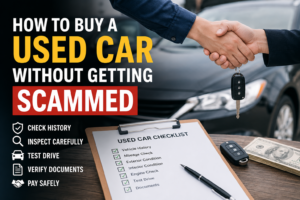
Buying a used car can save you thousands of dollars or pounds compared with buying new. But it can also become an expensive mistake if you overlook hidden problems, inaccurate mileage, accident history, outstanding finance, or dishonest sellers.
Whether you’re buying from a dealership or a private seller in the USA or UK, the key is knowing what to check before you hand over your money.
This guide explains how to buy a used car safely, what warning signs to watch for, how to inspect a vehicle, and how to avoid common used-car scams.
1. Set Your Budget Before You Start Shopping
Before looking at cars, decide how much you can realistically afford.
Don’t only consider the purchase price. Your real cost of ownership can include:
- Insurance
- Fuel or charging
- Registration and taxes
- Maintenance
- Repairs
- Tires
- Financing interest
- Road tax or other local charges
A $15,000 or £15,000 car could cost considerably more over the first year if it needs major repairs or has expensive insurance.
If you’re financing the vehicle, calculate the total amount you will pay, not just the monthly payment.
A seller offering a low monthly payment may still be charging a high overall price because of a long loan term or high interest rate.
2. Research the Car Before Meeting the Seller
Never buy a used car simply because it looks good or because the seller says it’s reliable.
Research the:
- Make and model
- Model year
- Engine
- Transmission
- Common mechanical problems
- Typical selling price
- Fuel economy
- Insurance costs
- Recall history
- Expected maintenance costs
Search for the exact model and year together with terms such as:
“[Car model] common problems”
“[Car model] reliability”
“[Car model] transmission problems”
“[Car model] recalls”
This can reveal problems that a seller may not mention.
3. Compare Prices Before Making an Offer
One of the easiest ways to avoid overpaying is to compare several similar vehicles.
Compare cars with similar:
- Model year
- Mileage
- Trim level
- Engine
- Condition
- Service history
- Location
Don’t assume the cheapest car is the best deal.
A vehicle priced significantly below the market average deserves extra investigation.
It could have:
- Accident damage
- Mechanical problems
- Salvage history
- Outstanding finance
- Incorrect mileage
- Missing documents
A suspiciously cheap car is often not a bargain.
4. Check the Vehicle History
A vehicle-history check can uncover information that isn’t obvious during a physical inspection.
Depending on the country and vehicle, look for:
- Previous accidents
- Salvage or write-off history
- Stolen-vehicle records
- Previous owners
- Mileage records
- Registration history
- Outstanding finance
- Title problems
- Import history
USA
In the United States, buyers can use vehicle-history services and should also check the vehicle’s title status.
Pay particular attention to terms such as:
- Salvage
- Rebuilt
- Flood
- Lemon
- Total loss
A clean-looking vehicle can still have serious previous damage.
UK
In the United Kingdom, buyers should check the vehicle’s history and MOT records.
Look for:
- MOT history
- Recorded mileage
- Previous failures
- Advisory items
- Write-off history
- Outstanding finance
- Stolen-vehicle status
Don’t rely solely on the seller’s description.
5. Verify the VIN or Registration Number
The vehicle identification number, commonly called the VIN, is one of the most important things to verify.
Compare the VIN shown on the vehicle with the VIN shown on the paperwork and history report.
In the UK, also verify the registration number.
If the identification numbers don’t match, stop the transaction until you understand why.
A mismatch can indicate a serious problem, including identity or documentation fraud.
6. Check the Mileage Carefully
Mileage is one of the most important factors affecting a used car’s value.
Unfortunately, mileage can sometimes be manipulated.
Don’t rely only on the number displayed on the dashboard.
Look for consistency between:
- Dashboard mileage
- Service records
- Inspection records
- Vehicle-history reports
- MOT records in the UK
- Previous listings
- Maintenance receipts
For example, if a vehicle currently shows 65,000 miles but an earlier service record shows 110,000 miles, walk away unless there is a legitimate explanation that can be independently verified.
7. Inspect the Exterior in Daylight
Never inspect a used car only at night or in a poorly lit garage.
Natural daylight makes it much easier to identify:
- Paint differences
- Scratches
- Dents
- Rust
- Panel gaps
- Previous repairs
- Uneven bodywork
Look at the vehicle from several angles.
Different shades of paint between panels can indicate previous repairs.
Also inspect the gaps between:
- Doors
- Hood/bonnet
- Trunk/boot
- Fenders/wings
- Bumpers
Uneven gaps may indicate previous collision damage.
8. Check for Signs of Flood or Water Damage
Flood-damaged vehicles can look perfectly normal after being cleaned and repaired.
Look for:
- Musty smells
- Damp carpets
- Water stains
- Rust in unusual locations
- Corrosion around electrical connections
- Moisture inside lights
- Mud or dirt in hidden areas
- Electrical problems
- New-looking carpets in an otherwise older vehicle
Be especially careful with cars that have been imported from areas affected by major flooding.
9. Inspect the Tires
Tires can tell you a lot about a vehicle.
Check:
- Tread depth
- Uneven wear
- Cracks
- Tire age
- Matching tire brands
- Correct tire size
Uneven tire wear can sometimes indicate:
- Poor wheel alignment
- Suspension problems
- Steering problems
- Accident damage
Replacing four tires can also be expensive, so factor their condition into your offer.
10. Inspect the Engine
If possible, inspect the engine when it is cold.
Some sellers may warm up a vehicle before you arrive because certain starting or engine problems are more obvious when the engine is cold.
Look for:
- Oil leaks
- Coolant leaks
- Damaged hoses
- Corrosion
- Excessive fluid residue
- Unusual smells
- Poor maintenance
Start the engine and listen carefully.
Watch for:
- Knocking
- Excessive ticking
- Grinding
- Squealing
- Unusual vibrations
- Excessive exhaust smoke
If you aren’t mechanically experienced, pay for an independent inspection.
That small expense can potentially save you thousands.
11. Check the Transmission
During the test drive, pay attention to how the transmission behaves.
For an automatic transmission, watch for:
- Hard shifting
- Delayed engagement
- Jerking
- Slipping
- Unusual noises
For a manual transmission, check for:
- Difficulty selecting gears
- Clutch slipping
- Grinding
- Excessive clutch pedal movement
Transmission repairs can be extremely expensive, so don’t ignore warning signs.
12. Test Every Electrical Feature
Don’t assume every button works.
Test:
- Headlights
- Brake lights
- Indicators/turn signals
- Air conditioning
- Heating
- Power windows
- Door locks
- Infotainment
- Backup camera
- Parking sensors
- Heated seats
- Electric seats
- Cruise control
- Wipers
- Interior lights
Modern vehicles contain a large amount of electronics, and electrical repairs can become expensive.
13. Look at the Dashboard Before Starting the Engine
When you turn the ignition on, many warning lights should illuminate briefly before the engine starts.
This is normal.
After starting the vehicle, however, most warning lights should turn off.
If important warning lights remain illuminated, investigate them before buying.
Pay particular attention to:
- Check engine light
- ABS light
- Airbag/SRS light
- Oil pressure light
- Battery warning light
- Traction-control light
Never allow a seller to convince you that a serious warning light is “nothing.”
14. Always Take a Proper Test Drive
A short trip around the block isn’t enough.
If possible, drive the car in different conditions.
Test:
- Cold starting
- Slow-speed driving
- City traffic
- Higher-speed roads
- Braking
- Acceleration
- Turning
- Parking
- Reverse gear
Pay attention to unusual:
- Vibrations
- Pulling
- Steering behavior
- Brake noises
- Engine noises
- Transmission behavior
A vehicle can feel fine while parked but reveal serious problems once driven.
15. Get an Independent Inspection
This is one of the most important steps when buying a used car.
Don’t rely entirely on the seller’s mechanic.
Arrange an inspection with an independent qualified mechanic or inspection service.
Ask them to check:
- Engine
- Transmission
- Suspension
- Brakes
- Tires
- Steering
- Cooling system
- Electrical system
- Undercarriage
- Signs of accident repairs
If the seller refuses to let you have the vehicle independently inspected, consider that a major warning sign.
16. Don’t Trust a Seller Who Creates Pressure
Scammers often try to create urgency.
You may hear:
“Someone else is coming to buy it today.”
“You need to send the deposit right now.”
“This price is only available for the next hour.”
Don’t let pressure make the decision for you.
A legitimate seller should be willing to give you reasonable time to verify the vehicle.
If something feels rushed, slow down.
17. Be Careful With Online Car Scams
Online marketplaces have made buying cars easier, but they have also created opportunities for scammers.
Be suspicious if:
- The price is far below market value
- The seller refuses to meet
- The seller says they’re overseas
- They request payment before you see the car
- They request cryptocurrency
- They insist on gift cards
- They send suspicious payment links
- They claim a third party will deliver the vehicle
- They refuse an independent inspection
Never send a large deposit simply because someone says other buyers are interested.
18. Never Pay Before You Verify the Vehicle
Whenever possible, inspect the vehicle, verify its identity and documentation, and confirm the seller before transferring money.
Be especially careful with:
- Bank transfers
- Wire transfers
- Cryptocurrency
- Gift cards
- Cash deposits
- Unusual payment platforms
Once money has been sent to a scammer, recovering it can be extremely difficult.
19. Verify the Seller’s Identity
If buying privately, verify who actually owns the vehicle.
The seller’s identity should make sense with the vehicle documentation.
Be cautious if someone says:
“I’m selling it for my brother.”
or
“It’s registered to my friend.”
That doesn’t automatically mean the car is a scam, but it gives you another reason to verify ownership carefully.
20. Check the Paperwork
Before completing the transaction, verify all relevant documents.
Depending on the country, these can include:
- Vehicle registration
- Title documentation
- Service records
- Maintenance receipts
- Inspection records
- MOT history
- Finance information
- Warranty documents
- Import documentation
Make sure the information is consistent across the documents and the vehicle.
21. Don’t Ignore Outstanding Finance
In the UK especially, checking whether a vehicle has outstanding finance is an important part of the buying process.
If you buy a vehicle with unresolved finance, you could potentially face serious problems later.
Always perform an appropriate vehicle-history/finance check before completing the purchase.
22. Be Careful With Imported Vehicles
Imported cars aren’t automatically bad, but they require additional research.
Find out:
- Where the vehicle came from
- Why it was imported
- Whether it has been damaged
- Whether parts are readily available
- Whether the vehicle specification differs from local versions
- Whether it has been properly registered
A low purchase price can become less attractive if repairs or parts are difficult to obtain.
23. Compare the VIN With the Vehicle
Before paying, physically verify the VIN against the paperwork.
Check multiple locations where applicable.
If the VIN appears:
- Altered
- Damaged
- Missing
- Different from the paperwork
stop the transaction.
Do not accept a seller’s explanation without independent verification.
24. Trust Evidence, Not Promises
A seller may say:
“It’s never been in an accident.”
Instead of simply believing them, verify the claim.
A seller may say:
“It has always been serviced.”
Ask for the records.
A seller may say:
“The engine is perfect.”
Have it inspected.
The safest used-car buyer is not necessarily the person who knows the most about cars.
It is the person who verifies the most information.
Used Car Scam Red Flags
Before buying, watch for these warning signs:
- Extremely low price
- Pressure to pay immediately
- Seller refuses inspection
- Seller refuses a test drive
- VIN doesn’t match paperwork
- Missing documents
- Inconsistent mileage
- Fresh paint on several panels
- Water or flood damage
- Strong chemical or air-freshener smell
- Warning lights
- Unusual engine noises
- Suspicious payment requests
- Seller won’t meet in person
- Seller claims to be overseas
- Vehicle history doesn’t match the seller’s story
One warning sign doesn’t automatically mean the car is a scam.
Several warning signs together should make you walk away.
Used Car Buying Checklist
Before handing over your money, confirm:
☐ Vehicle history checked
☐ VIN verified
☐ Registration/title verified
☐ Mileage verified
☐ Seller identity checked
☐ Exterior inspected
☐ Interior inspected
☐ Engine inspected
☐ Tires checked
☐ Brakes checked
☐ Warning lights checked
☐ Electrical features tested
☐ Test drive completed
☐ Independent inspection completed
☐ Finance/title status checked
☐ Documents verified
☐ Price compared with similar vehicles
☐ Payment method verified
☐ Sales agreement received
Final Thoughts
Buying a used car doesn’t have to be risky.
The biggest mistake is allowing excitement, pressure, or a seemingly great price to replace proper research.
Take your time. Research the vehicle. Check its history. Verify the VIN and documents. Inspect the car carefully. Take a proper test drive and, whenever possible, have an independent mechanic inspect it.
Most importantly, remember this rule:
If the deal feels too good to be true and the seller doesn’t want you to verify it, walk away.
There will always be another car.
A few hours of research can save you thousands in unexpected repairs, legal problems, or outright fraud.




Leave a Reply