 today deals
 special offer


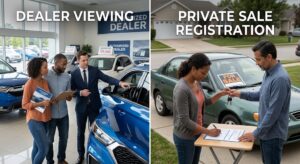
Buying a used vehicle is one of the most practical financial decisions you can make. You avoid the steep initial depreciation curve of a brand-new car, lower your insurance premiums, and get more features for your money. However, once you decide to buy used, you face a major fork in the road: Should you buy from a licensed dealership or a private seller?
Both routes have distinct benefits and trade-offs. Choose a dealership, and you buy convenience, peace of mind, and financing options—usually at a higher price tag. Choose a private seller, and you can secure a incredible bargain—at the expense of consumer protections, requiring you to handle the legal legwork and safety checks yourself.
Whether you are a first-time buyer or a seasoned auto enthusiast, this guide breaks down everything you need to know about buying from a dealer versus a private seller, helping you choose the path that best fits your budget, risk tolerance, and lifestyle.
1. Defining the Options: Who Are You Buying From?
Before comparing prices and process details, it helps to understand who sits across the table when you buy a car.
Car Dealerships
Dealerships generally fall into two categories:
-
Franchise Dealerships: These are multi-million-dollar businesses tied directly to a specific manufacturer (e.g., Toyota, Ford, BMW). They sell new cars alongside certified pre-owned (CPO) and higher-quality trade-in vehicles.
-
Independent Used Car Dealers: These are standalone lots that sell pre-owned vehicles of various makes and models. They range from large national chains to small local corner lots.
Both types of dealerships operate as registered commercial businesses governed by state and local consumer protection laws.
Private Sellers
A private seller is an individual selling a personal vehicle they own or lease. They might listed their car on online marketplaces, classified ad sites, or with a simple “For Sale” sign in the window.
Unlike dealerships, private sellers are not in the business of selling cars for profit as a primary occupation. They are usually looking to upgrade, downsize, or clear garage space.
2. Buying from a Car Dealership: The Full Breakdown
For many car buyers, walking onto a dealership lot offers a structured, predictable experience. However, that structured environment comes with both significant perks and hidden costs.
+-------------------------------------------------------------------+
|                     DEALERSHIP AT A GLANCE                        |
|                                                                   |
|   PROS                                  CONS                      |
|   • Statutory Consumer Protections     • Higher Purchase Prices   |
|   • On-Site Financing & Trade-Ins       • Dealer & Documentation Fees |
|   • Warranties & CPO Programs           • High-Pressure Sales     |
|   • Handled Registration & Title Work   • Aggressive Add-Ons      |
+-------------------------------------------------------------------+
The Pros of Buying from a Dealer
1. Built-In Consumer Protections and Warranties
The single biggest advantage of buying from a dealership is protection. In many jurisdictions, dealers are legally bound by “implied warranty” laws or “lemon laws” that guarantee a vehicle is fit for driving when sold.
Furthermore, dealerships offer structured warranty products:
-
Certified Pre-Owned (CPO) Programs: Franchise dealers inspect pre-owned vehicles using factory checklists, repair minor flaws, and back them with extended manufacturer warranties.
-
Dealer Warranties: Many independent dealers offer 30-, 60-, or 90-day limited powertrain warranties on used inventory.
2. One-Stop Financing and Payment Options
Unless you have full cash in hand, arranging auto financing can be time-consuming. Dealerships maintain relationships with dozens of lenders, credit unions, and national banks. Their finance departments can submit your application to multiple lenders at once to secure competitive financing terms, even if your credit score is less than perfect.
3. Seamless Paperwork and Licensing
Transferring a vehicle title, registering the car with your local DMV or transport agency, collecting sales tax, and arranging temporary license plates require administrative effort. Dealerships handle this entire paper trail on your behalf before you drive off the lot.
4. Trade-In Convenience
If you already own a car, a dealership allows you to turn your old vehicle into a down payment on your new one in a single transaction. While you might get slightly less than selling it yourself, the convenience and potential sales-tax savings often outweigh the difference.
The Cons of Buying from a Dealer
1. Higher Overall Prices
Dealerships carry significant operational overhead, including showroom rent, sales commissions, service technician salaries, and marketing budgets. To remain profitable, dealers price vehicles higher than private sellers.
2. Extra Fees and Documentation Costs
When you review a dealership contract, the vehicle price is rarely the final price. Dealers routinely add extra fees, including:
-
Documentation (Doc) Fees: Charges for processing paperwork.
-
Dealer Prep / Destination Fees: Costs for detailing or moving the car.
-
Reconditioning Fees: Charges added to recover the cost of fixing up the car for sale.
3. High-Pressure Sales and Upselling
Dealership sales consultants are trained negotiators. Buyers often face high-pressure tactics aimed at closing deals quickly. Additionally, the Finance & Insurance (F&I) office may aggressively push profitable add-ons like extended service contracts, tire protection packages, paint sealant, and GAP insurance.
3. Buying from a Private Seller: The Full Breakdown
Buying directly from an individual offers an authentic, informal transaction—and often the lowest purchase price possible—but it places all responsibility for due diligence directly on your shoulders.
+-------------------------------------------------------------------+
|                    PRIVATE SELLER AT A GLANCE                     |
|                                                                   |
|   PROS                                  CONS                      |
|   • Lowest Market Prices                • Sold strictly "As-Is"   |
|   • Direct Vehicle History & Owner Talk • No Built-in Financing   |
|   • Zero Hidden Dealer Fees             • Manual DMV & Paperwork  |
|   • More Flexible Price Negotiation     • Risk of Scams or Liens  |
+-------------------------------------------------------------------+
The Pros of Buying from a Private Seller
1. Substantially Lower Purchase Prices
Without sales staff, physical lots, or business overhead, private sellers can price their cars much lower than dealerships. Often, a vehicle priced at $15,000 on a dealer lot might sell for $12,000–$13,000 from a private individual.
2. Transparent Ownership History
When you buy from a private owner, you can talk directly to the person who drove and maintained the car. You can ask detailed questions:
-
How was the car driven (city vs. highway)?
-
Why are you selling it?
-
Do you have oil change and maintenance receipts?
An honest private owner can provide a clear context that no dealership salesperson ever could.
3. No Surprise Fees
With a private seller, what you negotiate is what you pay. There are no dealer preparation fees, documentation charges, or mandatory add-on packages added at signing.
4. A Relaxed Negotiation Environment
Private sellers are usually regular people looking to complete a smooth transaction. You won’t have to deal with sales managers, tier-pricing games, or high-pressure tactics. If you present reasonable market research, private sellers are often willing to compromise quickly to finalize a sale.
The Cons of Buying from a Private Seller
1. “As-Is” Sales and Zero Warranty
The fundamental rule of buying from a private seller is “Buyer Beware.” Almost all private vehicle sales are strictly “as-is.” Once money changes hands and you take possession of the vehicle, any mechanical failure, engine trouble, or hidden damage becomes entirely your financial responsibility.
2. Arranging Your Own Financing and Payment
Private sellers expect full payment upfront, usually via certified cashier’s check or wire transfer. If you need a car loan, you must secure pre-approval from your own bank or credit union before meeting the seller, adding extra planning steps to the process.
3. DIY Title Transfer and Registration Work
When buying privately, you must handle all legal paperwork yourself. This includes:
-
Verifying that the title is clean and clear of financial liens.
-
Filling out the bill of sale correctly.
-
Visiting the vehicle registry or DMV to transfer ownership, pay local sales taxes, and acquire license plates.
4. Safety and Fraud Risks
Meeting strangers to inspect a vehicle or complete cash transfers carries inherent risks. Title fraud, odometer tampering, or undisclosed flood damage are more common in unmonitored private transactions.

4. Head-to-Head Comparison: Dealer vs. Private Seller
To help you compare both options at a glance, here is a breakdown of how dealers and private sellers compare across seven core evaluation factors:
| Feature / Factor | Dealership | Private Seller |
| Average Price | Higher (Includes dealer margin and overhead) | Lower (Reflects direct market value) |
| Additional Fees | High (Doc fees, reconditioning fees, prep fees) | None (Only mandatory state taxes/registration) |
| Warranty Options | High (CPO, short-term warranties, service plans) | Very Low / None (Sold strictly “As-Is”) |
| Financing Availability | Flexible (In-house financing, multiple bank network) | DIY (Must arrange pre-approved personal auto loan) |
| Paperwork Handling | Automated (Handled completely by dealership staff) | Manual (Buyer & seller complete DMV forms together) |
| Consumer Protections | Stronger (Subject to dealer regulations & lemon laws) | Minimal (No statutory recourse after transaction) |
| Trade-In Option | Yes (Can trade in your current vehicle instantly) | No (Must sell your current car separately) |
5. Key Factors to Consider Before Choosing
To decide which buying channel fits your situation best, evaluate these four critical personal factors:
Factor 1: Your Mechanical Comfort Level
-
If you are comfortable inspecting under the hood, checking fluid conditions, scanning for diagnostic codes, or taking a car to a trusted mechanic, a private seller offers unmatched value.
-
If you know little about car mechanics and want guaranteed protection against unexpected repair bills, a dealership (especially a Certified Pre-Owned program) offers safety and peace of mind.
Factor 2: Your Financing Requirements
-
If you need specialized financing, have a low credit score, or want to roll an existing car loan into a new purchase, a dealership has the financial infrastructure to structure those complex loans.
-
If you have cash saved or are pre-approved for an auto loan through your personal bank, you are in an ideal position to buy from a private seller.
Factor 3: Time and Convenience vs. Cost Savings
-
If you value time above all else, want to complete your purchase, hand over your old car, sign paperwork, and drive home in a single afternoon, go to a dealership.
-
If you value saving money above all else and don’t mind taking extra time to arrange independent mechanics, handle DMV visits, and coordinate with sellers, buy from a private seller.
6. How to Protect Yourself Regardless of Where You Buy
Whether you decide to walk onto a dealership lot or meet a private seller in your neighborhood, taking proper precautions will protect your investment:
The Essential 4-Step Used Car Checklist
Run a Vehicle History Report: Never buy a used car without checking its VIN through a reputable vehicle history provider (such as Carfax or AutoCheck) to check for accident histories, title status, and mileage consistency.
Schedule an Independent Pre-Purchase Inspection (PPI): Always hire an independent, licensed mechanic to inspect the vehicle. Even if a dealership claims they ran a “150-point inspection,” an unbiased third-party check can reveal hidden issues.
Perform a Thorough Test Drive: Drive the car on both city roads and open highways. Test the brakes, acceleration, air conditioning, electrical systems, steering alignment, and listen for unusual suspension noises.
Verify Clean Documentation: Confirm the seller’s identification matches the name on the physical vehicle title. Ensure the title is free of outstanding bank liens before handing over any payment.
7. The Final Verdict: Which Is Best for You?
There is no single “right” choice when buying a used car—only the choice that best matches your budget, confidence, and expectations.
-
Choose a Dealership if: You prioritize convenience, want comprehensive consumer protections or extended warranties, need flexible in-house financing, and prefer having all legal registration paperwork managed for you.
-
Choose a Private Seller if: You prioritize getting the absolute best price, want direct answers from the previous owner, feel comfortable conducting vehicle inspections, and are prepared to handle your own financing and registration.
By knowing what each option offers, doing your mechanical research upfront, and refusing to rush the buying process, you can confidently drive away in a reliable pre-owned vehicle that serves you well for years to come.




Leave a Reply