
 today deals
 special offer



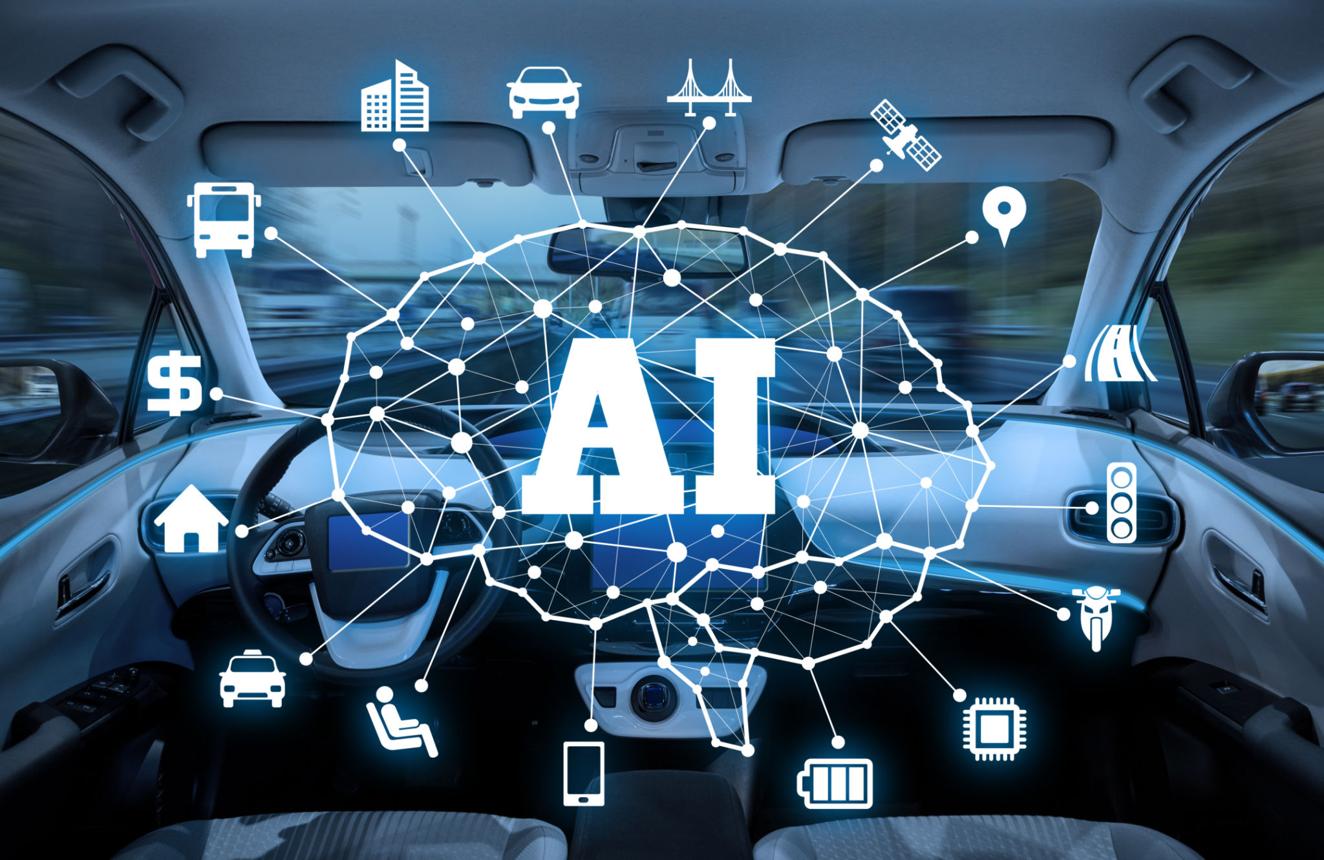
Artificial intelligence (AI) is no longer something we only see in science-fiction movies. It is already becoming an important part of modern cars.
From vehicles that can help drivers stay in their lanes to systems that can detect potential mechanical problems before they become expensive repairs, AI is changing the way cars are designed, driven, maintained, and even purchased.
Here’s how AI is transforming the automotive industry.
1. AI Is Making Cars Smarter
Traditional cars mainly respond to commands from the driver. Modern vehicles can do much more.
AI-powered systems can process information from cameras, radar, sensors, GPS, and other vehicle components. They use this information to understand what is happening around the car and make predictions or recommendations.
For example, an intelligent vehicle may recognize:
- Another vehicle approaching from the side
- A pedestrian crossing the road
- Traffic slowing ahead
- A driver becoming distracted
- Unusual engine or battery behavior
- A potential collision
The goal is not simply to make cars more complicated. AI is being used to make vehicles safer, more efficient, and more convenient.
2. Self-Driving Cars
One of the most talked-about applications of AI in the automotive industry is autonomous driving.
Self-driving technology uses AI to interpret information from cameras, radar, lidar, GPS, and other sensors. The vehicle’s computer then uses that information to decide what the car should do.
For example, an autonomous-driving system may need to determine whether to:
- Slow down because traffic is stopping.
- Stop for a pedestrian.
- Change lanes when it is safe.
- Follow the road around a curve.
- Maintain a safe distance from another vehicle.


However, it’s important to understand that driver assistance and fully autonomous driving are not the same thing.
Many vehicles available today have advanced driver-assistance features, but that does not necessarily mean the driver can safely stop paying attention to the road.
3. AI-Powered Driver Assistance
You don’t need a fully self-driving car to benefit from AI.
Many modern vehicles use intelligent systems to assist the driver. These technologies can include:
- Automatic emergency braking
- Adaptive cruise control
- Lane-keeping assistance
- Blind-spot monitoring
- Traffic-sign recognition
- Driver monitoring
- Parking assistance
- Forward-collision warnings
These features can continuously analyze the environment and react much faster than a human driver in certain situations.
For drivers, the biggest benefit is an additional layer of safety.
4. Predictive Maintenance
Perhaps one of the most useful applications of AI for everyday car owners is predictive maintenance.
Traditionally, drivers take their vehicles to a mechanic after noticing a problem or follow a fixed maintenance schedule.
AI can potentially change this approach.
Modern vehicles contain numerous sensors that monitor things such as:
- Engine temperature
- Oil pressure
- Battery condition
- Tire pressure
- Brake performance
- Transmission behavior
- Engine performance
- EV battery health
AI systems can analyze this information and identify unusual patterns.
For example, if a vehicle notices that a component is behaving differently from normal, the system could warn the driver that maintenance may be required.


Instead of waiting for a component to fail, predictive maintenance aims to identify potential problems before they become major failures.
That could help drivers reduce unexpected breakdowns and potentially save money on repairs.
5. AI Is Changing Electric Vehicles
AI is particularly important in electric vehicles (EVs).
Electric cars constantly monitor their batteries, motors, charging systems, and energy consumption. AI can analyze this information to improve efficiency.
For example, intelligent software can help optimize:
Battery management: Monitoring battery temperature, charging behavior, and performance.
Range prediction: Estimating how far the vehicle can travel based on driving conditions.
Energy consumption: Learning how driving habits affect electricity usage.
Charging: Helping determine when and how the vehicle should charge.


As EV technology develops, AI could become even more important in improving battery life and energy efficiency.
6. AI Can Personalize the Driving Experience
AI isn’t only about safety and mechanical systems.
It can also make the vehicle feel more personalized.
Modern cars can learn certain driver preferences, such as:
- Seat position
- Climate settings
- Navigation destinations
- Driving patterns
- Infotainment preferences
- Preferred charging locations
AI-powered voice assistants can also allow drivers to interact with vehicle systems using natural language instead of navigating complicated menus.
Imagine saying:
“Find me the nearest charging station and set the cabin temperature to 21°C.”
Instead of pressing several buttons, the vehicle could understand the request and perform the appropriate actions.
7. AI Is Improving Car Manufacturing
AI is also changing what happens before a car reaches the customer.
Automakers use AI and machine-learning systems in areas such as:
- Factory automation
- Quality control
- Robot-assisted manufacturing
- Supply-chain management
- Vehicle design
- Production planning
- Defect detection
Computer vision systems can inspect vehicle components and identify certain manufacturing defects.
This can help manufacturers improve consistency and potentially reduce production problems.
8. AI Could Make Car Buying Smarter
AI is also beginning to influence the car-buying experience.
Online automotive platforms can use AI to recommend vehicles based on factors such as:
- Budget
- Family size
- Fuel economy
- Driving habits
- Location
- Vehicle type
- Previous searches
AI can also help dealerships analyze inventory and predict which vehicles are likely to sell faster.
For buyers, this could eventually make finding the right vehicle easier.
9. What Are the Problems With AI Cars?
AI-powered vehicles offer many advantages, but they also create new challenges.
Privacy
Connected vehicles can generate large amounts of information about how, where, and when a vehicle is used.
This raises questions about how that information should be collected, stored, and shared.
Cybersecurity
The more connected a vehicle becomes, the more important cybersecurity becomes.
A modern car can contain numerous computers and communication systems, so manufacturers must protect vehicles against unauthorized access.
Cost
Advanced sensors, computing hardware, and software can increase the cost of vehicles and repairs.
Human Trust
Drivers must understand what their vehicle’s AI system can and cannot do.
A driver-assistance system should not automatically be treated as a replacement for an attentive human driver.
10. What Does the Future of AI in Cars Look Like?
The future could bring even greater integration between artificial intelligence and vehicles.
We could see cars that become better at:
- Predicting mechanical failures
- Understanding driver behavior
- Managing energy consumption
- Communicating with infrastructure
- Finding parking
- Planning routes
- Detecting road hazards
- Automating more driving tasks
Cars may eventually become less like traditional machines and more like intelligent computers on wheels.
However, the transition will happen gradually. Safety, regulations, infrastructure, cost, cybersecurity, and public acceptance will all influence how quickly autonomous and AI-powered technologies become widespread.
AI is already changing the automotive industry, even if you don’t own a self-driving car.
From advanced driver assistance and predictive maintenance to EV battery management and intelligent infotainment, artificial intelligence is becoming an increasingly important part of modern vehicles.
The biggest change may not be that cars can drive themselves. It may be that cars are becoming capable of understanding their surroundings, learning from data, predicting problems, and assisting drivers in ways that were previously impossible.




Leave a Reply